
Fibroids vs Adenomyosis: Do You Always Need Uterus Removal?
Published on:
November 16, 2026
Many women experiencing heavy menstrual bleeding, painful periods, or pelvic discomfort are diagnosed with uterine fibroids or adenomyosis. One of their biggest concerns after diagnosis is whether they will need to undergo surgery to remove their uterus.
But is uterus removal (hysterectomy) the only treatment option?
Not necessarily. Fibroids vs adenomyosis is an important distinction because both conditions affect the uterus but have different characteristics and treatment approaches. Depending on the diagnosis, symptoms, age, overall health, and future pregnancy plans, women may have several treatment options to consider.
One such option is uterine fibroid embolization (UFE), a minimally invasive procedure that can help treat uterine fibroids without surgically removing the uterus in suitable patients.
Let’s understand the differences between these conditions and explore the available treatment options.
What Are Uterine Fibroids?
Uterine fibroids are non-cancerous growths that develop in or around the uterus. They can vary in size, number, and location. Some women may have fibroids without experiencing any noticeable symptoms, while others may experience discomfort that affects their daily activities.
Common symptoms of uterine fibroids include:
- Heavy or prolonged menstrual bleeding
- Painful menstrual periods
- Pelvic pain or pressure
- Frequent urination
- Lower back discomfort
- Abdominal fullness or bloating
- Difficulty becoming pregnant in some cases
Not every woman with fibroids requires treatment. Doctors consider the size, number, location, and symptoms before recommending an appropriate treatment approach.
To understand the condition and available treatment approaches in more detail, read about uterine fibroids and their treatment options.
For additional medical information, refer to the American College of Obstetricians and Gynecologists (ACOG) guide to uterine fibroids.
What Is Adenomyosis?
Adenomyosis is a condition in which tissue similar to the lining of the uterus grows into the muscular wall of the uterus.
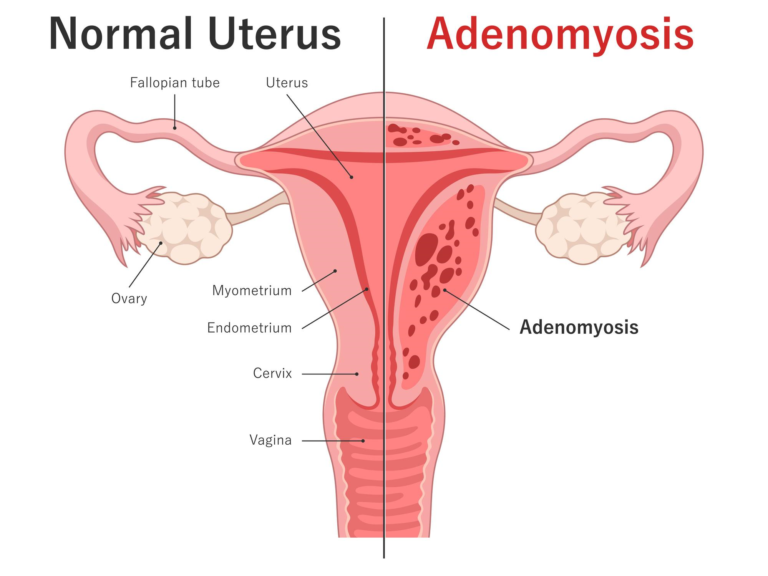
This can cause the uterus to become enlarged and may lead to heavy menstrual bleeding and painful periods.
Common symptoms of adenomyosis include:
- Heavy menstrual bleeding
- Severe menstrual cramps
- Persistent pelvic pain
- Abdominal bloating or heaviness
- Pain during or after sexual intercourse
Some women with adenomyosis may not experience noticeable symptoms, while others may have discomfort that interferes with their everyday activities.
Doctors may recommend a pelvic ultrasound or MRI to evaluate the uterus and identify signs of adenomyosis.
For more information, read the NHS guide to adenomyosis, its symptoms, diagnosis, and treatment.
Fibroids vs Adenomyosis: What Is the Difference?
Although both conditions affect the uterus and may cause similar symptoms, they are not the same.
Understanding the difference between fibroids vs adenomyosis helps patients understand why treatment recommendations may vary.
Do You Always Need Uterus Removal for Fibroids or Adenomyosis?
No. Hysterectomy, which is the surgical removal of the uterus, is not automatically required for every woman diagnosed with uterine fibroids or adenomyosis.
The treatment approach depends on several factors, including
- The type and severity of the condition
- The size, number, and location of fibroids
- The severity of bleeding and pelvic pain
- The patient’s age and overall health
- Whether the patient wishes to become pregnant in the future
- Previous treatments and their results
For women with symptomatic fibroids, fibroid treatment without surgery may be possible through medication or minimally invasive procedures.
Similarly, selected women with adenomyosis may have treatment options that help manage symptoms without immediately undergoing hysterectomy.
However, not every treatment is suitable for every patient. A specialist consultation is important to understand the benefits and limitations of each option.
What Are the Treatment Options for Uterine Fibroids Without Hysterectomy?
Women looking for fibroid treatment without hysterectomy can discuss different treatment approaches with their doctors.
The choice depends on individual medical findings and treatment goals.
1. Medication
Medication may help manage symptoms such as heavy menstrual bleeding and painful periods.
Depending on the condition, doctors may recommend:
- Hormonal medications to regulate menstrual bleeding
- Non-hormonal medicines to reduce heavy bleeding
- Pain-relieving medicines to manage menstrual discomfort
Medication may help control symptoms, but it does not necessarily shrink or remove fibroids.
2. Myomectomy
Myomectomy is a surgical procedure that removes uterine fibroids while preserving the uterus.
It may be recommended for women with symptomatic fibroids who wish to retain their uterus, including some women planning future pregnancies.
The procedure can be performed through different surgical approaches depending on the size, number, and location of the fibroids.
3. Uterine Fibroid Embolization (UFE/UAE)
Uterine Fibroid Embolization (UFE), also known as Uterine Artery Embolization (UAE), is a minimally invasive, image-guided procedure used to treat symptomatic uterine fibroids.
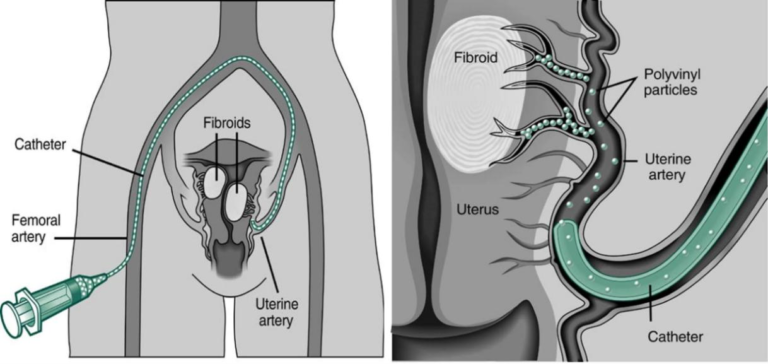
It is an option for selected women who want to explore minimally invasive fibroid treatment without surgically removing the uterus.
Unlike conventional surgery, UFE does not involve removing the fibroids or the uterus. Instead, it reduces the blood supply to the fibroids, helping them shrink over time.
How Does Uterine Fibroid Embolization Work?
The procedure generally involves the following steps:
- Catheter insertion: A small catheter is inserted into a blood vessel, usually through the wrist or groin.
- Image guidance: The interventional radiologist uses imaging to guide the catheter towards the arteries supplying the fibroids.
- Blocking blood supply: Tiny particles are released to block selected blood vessels supplying the fibroids.
- Fibroid shrinkage: With reduced blood supply, the fibroids gradually shrink over time.
- Symptom improvement: As the fibroids shrink, symptoms such as heavy menstrual bleeding and pelvic pressure may improve.
What Are the Benefits of UFE?
For suitable patients, potential benefits include:
- Preserves the uterus without surgically removing it.
- Does not require a large surgical incision.
- Can treat multiple fibroids during the same procedure.
- May help reduce heavy menstrual bleeding and pelvic pressure.
- Generally involves a shorter recovery period than major surgery.
However, UFE is not suitable for every patient. Some women may require additional treatment later.
Women planning future pregnancies should discuss the possible effects on fertility and pregnancy outcomes with their gynecologist and interventional radiologist before choosing this procedure.
To understand the procedure in more detail, read this patient guide from RadiologyInfo about uterine fibroid embolization.
You can also learn more about uterine artery embolization from ACOG.
Can Adenomyosis Be Treated Without Hysterectomy?
Yes. Depending on the severity of symptoms and individual medical circumstances, adenomyosis treatment may include medication, hormonal therapies, and selected procedures.
Some treatment approaches include:
1. Hormonal Treatment
Hormonal medications may help manage heavy menstrual bleeding and painful periods. A doctor may recommend suitable hormonal treatment based on the patient’s health and reproductive plans.
2. Pain Management
Pain-relieving medications may help reduce menstrual cramps and pelvic discomfort. The type of medication depends on the patient’s symptoms and medical history.
3. Uterine Artery Embolization
Uterine artery embolization may be considered for selected women with adenomyosis after specialist evaluation.
The procedure aims to reduce blood supply to the affected uterine tissue. However, outcomes vary, and it should not be considered a guaranteed cure.
4. Hysterectomy
For women with severe adenomyosis who do not respond to other treatments and do not wish to become pregnant in the future, hysterectomy may be considered.
It is important to understand that hysterectomy is the definitive treatment for adenomyosis, but it permanently removes the ability to carry a pregnancy.
When Is Hysterectomy Recommended?
Although several hysterectomy alternatives are available for suitable patients, uterus removal may still be an appropriate treatment in certain situations.
A doctor may recommend or discuss hysterectomy when:
- Heavy menstrual bleeding continues despite other treatments.
- Fibroids cause significant symptoms that cannot be managed effectively through alternatives.
- Adenomyosis causes persistent and severe pain or bleeding.
- Other treatment options are unsuitable or have not provided sufficient relief.
- The patient prefers a definitive treatment and does not wish to preserve her uterus.
Before making a decision, women should discuss the benefits, risks, recovery, and possible alternatives with their treating specialist.
How Do You Choose the Right Treatment?
There is no single treatment that works for every woman diagnosed with fibroids or adenomyosis.
Before selecting a treatment, discuss these questions with your doctor:
- Do I have uterine fibroids, adenomyosis, or both?
- What is the size and location of my fibroids?
- Can my symptoms be managed without surgery?
- Am I suitable for uterine fibroid embolization?
- Will the treatment affect my future pregnancy plans?
- What are the benefits, risks, and limitations of each option?
A detailed medical evaluation helps doctors recommend an appropriate treatment based on individual needs.
Watch Dr. Sridhar Devu Explain Fibroid Treatment Without Removing the Uterus
Dr. Sridhar Devu, Endovascular Interventional Radiologist, explains the available treatment options for uterine fibroids and adenomyosis, including minimally invasive procedures that may help preserve the uterus.
In this video, learn how Uterine Fibroid Embolization (UFE) works, how it reduces the blood supply to fibroids, and what women should discuss with their doctors before choosing treatment.
Watch the video below:
Fibroid Treatment Without Removing the Uterus? – Dr. Sridhar Devu
For more information about the specialist, visit Dr. Sridhar Devu’s profile.
Conclusion
A diagnosis of uterine fibroids or adenomyosis does not automatically mean that uterus removal is necessary. Several treatment approaches may help manage symptoms, depending on the patient’s condition and medical history.
For suitable patients, uterine fibroid embolization offers a minimally invasive option for treating uterine fibroids without surgically removing the uterus.
If you are experiencing heavy menstrual bleeding, painful periods, or pelvic discomfort, consult a qualified specialist to understand your diagnosis and explore the available treatment options.
At DEV Hospitals, Dr. Sridhar Devu provides consultations for patients exploring minimally invasive, image-guided treatment options for fibroids.
Have questions about fibroid treatment?
Consult a specialist to understand whether UFE or another treatment approach may be suitable for your condition.
Call / WhatsApp: +91 7993914154
Hospital: DEV Hospitals, Metro Pillar 1729, Best-Vision Eye & Dr Agarwal Eye Hospital Building, Madhapur Road, Phase 2, Kavuri Hills, Hyderabad, Telangana – 500081.
Frequently Asked Questions
Fibroids are non-cancerous growths that develop in or around the uterus, whereas adenomyosis occurs when tissue similar to the uterine lining grows into the muscular wall of the uterus. Both conditions can cause heavy menstrual bleeding and pelvic pain.
Yes. Depending on the size, location, and symptoms, treatment options may include medication, myomectomy, and uterine fibroid embolization (UFE).
Both procedures have different purposes, benefits, and limitations. UFE helps shrink fibroids while preserving the uterus, whereas hysterectomy removes the uterus. The appropriate option depends on the patient's condition, treatment goals, and future pregnancy plans.
No. UFE blocks selected blood vessels supplying the fibroids, helping them shrink gradually. It does not physically remove the fibroids.
Yes. Medication, hormonal treatments, and selected procedures such as uterine artery embolization may help manage symptoms in suitable patients. However, hysterectomy may be considered when symptoms remain severe despite other treatments.
Pregnancy after UFE is possible, but its effects on fertility and pregnancy outcomes are not fully established. Women planning future pregnancy should discuss the benefits and limitations of UFE and alternatives such as myomectomy with their specialists.
Consult a qualified healthcare professional if you experience persistent heavy menstrual bleeding, severe menstrual cramps, pelvic pain, or discomfort that affects your daily activities. Early evaluation can help identify the cause and appropriate treatment options.