
Menu
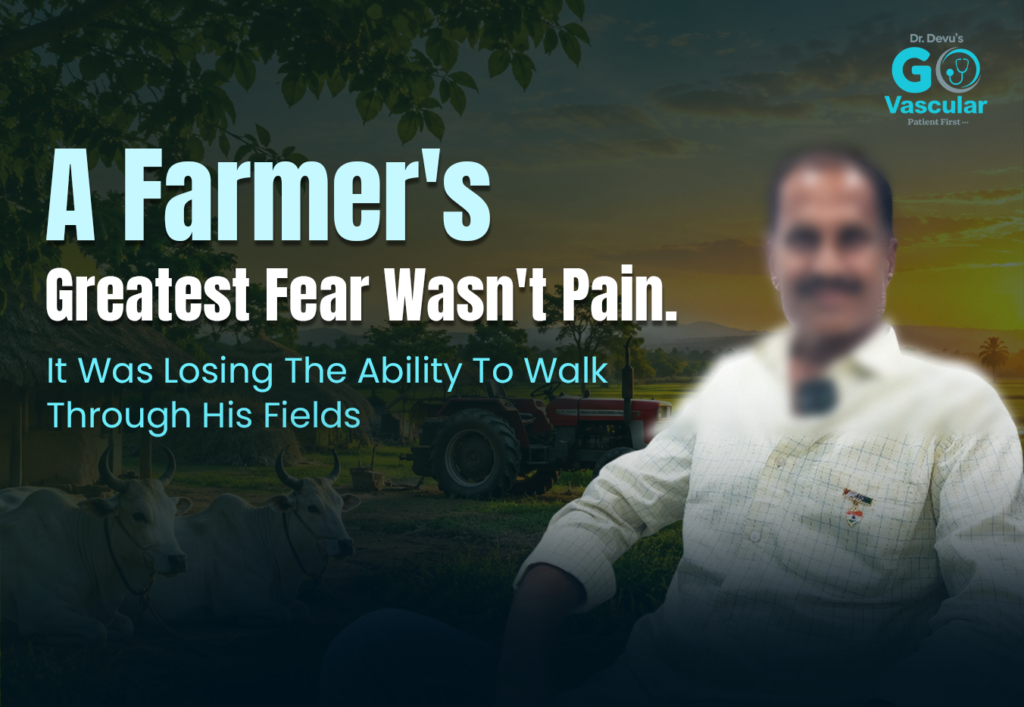
When Walking Becomes Difficult: What a Farmer’s Journey Taught Me About Varicose Veins
Published on:
October 05, 2026
When Walking Becomes Difficult: What a Farmer’s Journey Taught Me About Varicose Veins
By Dr. Sridhar Devu - Endovascular Interventional Radiologist
As physicians, we often focus on diagnoses, investigations, and treatment plans.
Patients, however, experience something very different.
They experience limitations.
They experience fear.
And most importantly, they experience the gradual loss of activities that once felt effortless.
Recently, I met a farmer from Warangal whose story reminded me of an important truth:
People rarely seek treatment because of a diagnosis.
They seek treatment because a condition starts taking away parts of their daily life.
For this patient, that loss was the ability to walk comfortably in his own fields.
A Life Built Around Movement
The patient was a 60-year-old farmer whose daily routine revolved around agricultural work.
Like many farmers, his day began early and involved long hours on his feet.
Walking through fields.
Inspecting crops.
Managing daily operations.
Physical activity was not exercise for him.
It was his livelihood.
When he first noticed discomfort in his legs, he did what many people do.
He ignored it.
The Symptoms That Slowly Changed Everything
The symptoms did not appear suddenly.
They developed gradually over time.
Initially, there was leg pain.
Then swelling.
Then increasing discomfort.
Eventually, even routine walking became difficult.
This pattern is common in patients with chronic venous disease and varicose veins. Symptoms often include aching, heaviness, swelling, discomfort, and worsening symptoms after prolonged standing.
The challenge is that many people assume these symptoms are simply part of aging or hard work.
As a result, they continue adapting their lifestyle around the problem instead of investigating its cause.
Why Patients Delay Seeking Help
One of the most interesting aspects of vascular medicine is that symptoms often progress slowly.
Patients adjust without realizing it.
They walk less.
Take more breaks.
Avoid certain activities.
Accept discomfort as normal.
Over time, these adjustments become part of daily life.
By the time many patients seek specialist care, they have been living with symptoms for months or even years.
This patient’s story followed a similar pattern.
What started in one leg gradually began affecting both legs.
The condition was no longer an inconvenience.
It was beginning to interfere with daily functioning.
Looking Beyond Leg Pain
Leg pain is one of the most misunderstood symptoms in medicine.
Not every painful leg has a vascular cause.
Pain may arise from:
- Muscles
- Joints
- Nerves
- Blood vessels
That is why proper evaluation is important.
For patients with varicose veins or chronic venous disease, symptoms often include:
- Leg heaviness
- Swelling
- Aching discomfort
- Visible vein changes
- Fatigue in the legs
These symptoms may worsen after prolonged standing and affect quality of life.
The goal is not simply to identify symptoms.
The goal is to understand why they are occurring.
The Importance of Individualized Treatment
One aspect of healthcare that patients often appreciate is personalized decision-making.
Every patient arrives with a unique combination of:
- Symptoms
- Occupation
- Activity level
- Expectations
- Medical history
A farmer’s requirements are different from an office worker’s.
A teacher’s needs are different from a driver’s.
The treatment strategy should reflect those differences.
That is why patient evaluation should always extend beyond imaging studies and clinical findings.
Understanding how symptoms affect a person’s daily life is equally important.
The Evolution of Modern Varicose Vein Care
Over the last two decades, vascular treatment has evolved significantly.
Many patients still associate varicose vein treatment with traditional surgery and prolonged recovery.
However, modern endovenous techniques have transformed how specialists approach venous disease. Symptomatic varicose veins can often be managed using minimally invasive endovenous approaches designed to address venous reflux and improve symptoms.
For patients, the most meaningful outcome is rarely the technical success of a procedure.
It is the ability to return to daily activities with greater comfort and confidence.
What This Farmer’s Story Teaches Us
Every patient leaves behind a lesson.
This particular journey reinforces three important points.
1. Persistent Symptoms Deserve Attention
Pain and swelling that continue for months should not be dismissed as routine fatigue.
2. Mobility Matters
Many people realize the value of walking comfortably only after it becomes difficult.
3. Early Evaluation Creates More Options
Timely diagnosis allows physicians and patients to make informed decisions before symptoms progress further. Early recognition of venous disease can help reduce the impact on daily activities and quality of life.
A Doctor’s Reflection
What stayed with me most about this patient was not a scan result.
It was a simple statement.
He explained that walking had become difficult enough to affect the work he had performed his entire life.
For a farmer, mobility is independence.
It is productivity.
It is dignity.
Helping patients preserve those things remains one of the most rewarding aspects of vascular care.
Final Thoughts
Many people view leg pain and swelling as minor inconveniences.
Sometimes they are.
Sometimes they are not.
The challenge lies in knowing the difference.
If symptoms are persistent, progressive, or affecting daily activities, they deserve evaluation rather than assumptions.
This farmer’s story serves as a reminder that listening to the body’s signals is often the first step toward finding answers.
And in many cases, early action can make all the difference.
Doctor's Quote
“Patients often adapt to leg pain and swelling for years before seeking help. The problem is not always the pain itself—it is the gradual loss of mobility and quality of life that follows. Early evaluation allows us to understand the cause and guide patients toward appropriate treatment options.”
— Dr. Sridhar Devu
Endovascular Interventional Radiologist
Frequently Asked Questions
No. These symptoms can have multiple causes, including muscular, orthopedic, neurological, and vascular conditions. Proper evaluation is important.
Leg heaviness, swelling, aching discomfort, visible veins, and worsening symptoms after prolonged standing are common features.
Yes. Chronic venous disease may impact walking, standing, work performance, and overall quality of life.
Symptoms often develop gradually, leading people to assume they are part of aging or routine fatigue.
Persistent leg pain, swelling, heaviness, or visible vein changes that interfere with daily activities should be medically evaluated.