
Menu
Do All Women With Fibroids Need Hysterectomy? Understanding Treatment Options for Uterine Fibroids
Published on:
October 12, 2026
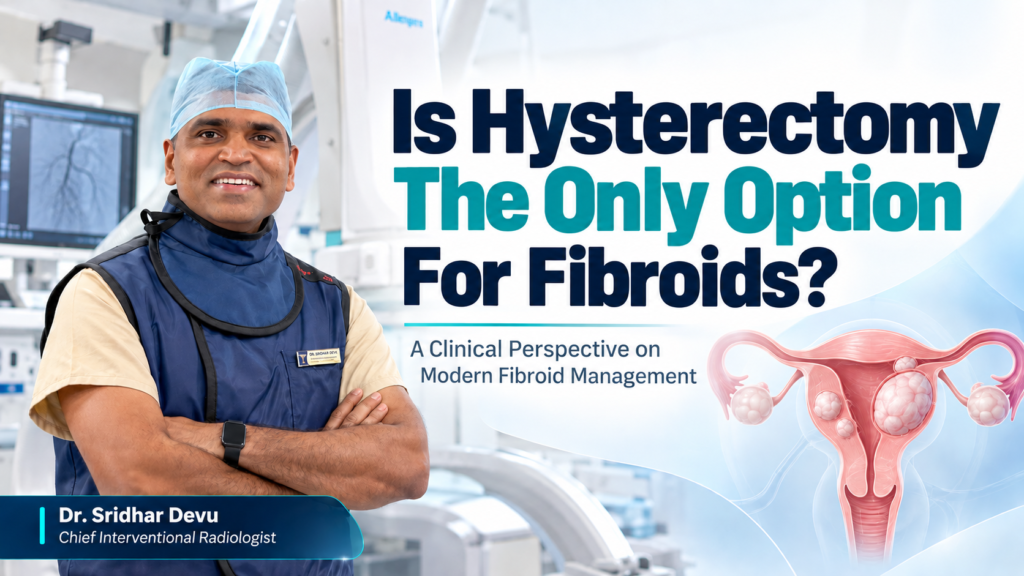
When a woman is diagnosed with uterine fibroids, one of the first concerns she often has is:
“Will I need surgery?”
For some patients, the conversation quickly progresses to hysterectomy—the surgical removal of the uterus. While hysterectomy remains an important and appropriate treatment option in selected situations, it is equally important to recognize that not every woman with fibroids requires the same approach.
Modern fibroid management has evolved significantly over the past two decades. Today, treatment decisions are increasingly guided by the patient’s symptoms, goals, age, fibroid characteristics, and overall health rather than a one-size-fits-all strategy.
Understanding this distinction is essential for both patients and healthcare providers.
Understanding Uterine Fibroids
Uterine fibroids are non-cancerous growths that develop within or around the uterus.
They are extremely common and affect millions of women worldwide.
Many women may have fibroids without realizing it because fibroids do not always cause symptoms.
However, some women may experience:
- Heavy menstrual bleeding
- Pelvic pressure
- Abdominal fullness
- Frequent urination
- Pelvic discomfort
- Reproductive health concerns
The impact of fibroids varies significantly from person to person.
This variability is one of the reasons why treatment decisions should be individualized.
Why Hysterectomy Became a Common Recommendation
Historically, hysterectomy was often considered the definitive treatment for symptomatic fibroids.
From a clinical standpoint, removing the uterus eliminates fibroids and prevents recurrence.
For some women, particularly those with severe symptoms, large fibroid burden, or specific clinical circumstances, hysterectomy remains an appropriate and effective option.
However, the assumption that every woman with fibroids requires hysterectomy does not reflect modern treatment pathways.
The key question should never be:
“How do we treat the fibroid?”
Instead, it should be:
“What is the most appropriate treatment for this individual patient?”
Every Patient's Situation Is Different
Fibroid management should begin with a comprehensive evaluation.
Several factors influence treatment decisions:
Symptom Severity
Not all fibroids require intervention.
Some women may only need observation and regular follow-up
Fibroid Size and Location
The number, size, and location of fibroids often influence management strategies.
Age and Reproductive Goals
A younger woman may have different priorities than someone approaching menopause.
Overall Health Status
Medical history, concurrent conditions, and procedural suitability all play important roles.
Because these variables differ significantly among patients, treatment recommendations should be personalized rather than standardized.
The Growing Role of Minimally Invasive Treatments
One of the most important developments in women’s healthcare has been the expansion of minimally invasive treatment options.
Among these approaches is uterine fibroid embolization (UFE), a procedure performed by interventional radiologists.
UFE works by reducing blood flow to fibroids, helping them shrink over time.
Like any medical procedure, UFE is not suitable for every patient.
However, it represents one of several treatment options that may be considered in appropriately selected individuals.
The goal is not to replace surgery.
The goal is to ensure patients understand all available evidence-based options before making treatment decisions.
The Importance of Shared Decision-Making
One of the most valuable aspects of modern healthcare is shared decision-making.
Patients today have access to more information than ever before.
While this access can be empowering, it can also create confusion when conflicting opinions are encountered.
Healthcare professionals have a responsibility to guide patients through these decisions by:
- Explaining diagnoses clearly
- Discussing available treatment options
- Reviewing benefits and limitations
- Addressing patient concerns
- Supporting informed decision-making
The best treatment plan is often the one that aligns clinical evidence with the patient’s individual goals and preferences.
Why Education Matters
Many women diagnosed with fibroids arrive at consultations carrying significant anxiety.
Often, that anxiety is not caused by fibroids alone.
It is caused by uncertainty.
Questions such as:
- What happens if I wait?
- Do I need surgery?
- Are there alternatives?
- What option is best for me?
are completely understandable.
Patient education plays a critical role in reducing fear and improving confidence in healthcare decisions.
An informed patient is better equipped to participate actively in discussions about treatment and long-term health planning.
Looking Beyond a Single Treatment Path
Perhaps the most important lesson in fibroid care is that treatment should never be reduced to a single predetermined pathway.
Some women may benefit from observation.
Some may require medication.
Some may be candidates for minimally invasive procedures.
Others may ultimately require surgery.
The appropriate choice depends on the individual—not solely on the diagnosis.
As healthcare providers, our role is to ensure that women understand their options and have access to evidence-based guidance that supports informed decision-making.
Doctor's Perspective
“One of the most common misconceptions surrounding fibroids is that hysterectomy is the only available solution. In reality, treatment decisions should be individualized and guided by symptoms, clinical findings, patient goals, and careful evaluation. Awareness and education help women make informed healthcare choices.”
— Dr. Sridhar Devu
Chief Interventional Radiologist
Frequently Asked Questions
No. Some fibroids may not cause symptoms and can often be monitored through regular medical follow-up.
No. Depending on individual circumstances, treatment options may include observation, medications, minimally invasive procedures, or surgery.
UFE is a minimally invasive procedure performed by Interventional Radiologists that reduces blood flow to fibroids, helping them shrink over time.
Treatment decisions are based on symptoms, fibroid characteristics, age, reproductive goals, overall health, and physician assessment.
Women experiencing persistent symptoms such as heavy bleeding, pelvic pressure, or discomfort should consult a qualified healthcare professional for evaluation.