
Menu
Why Farmers Often Ignore Varicose Vein Symptoms: Lessons from a Decade of Leg Pain
Published on:
October 08, 2026
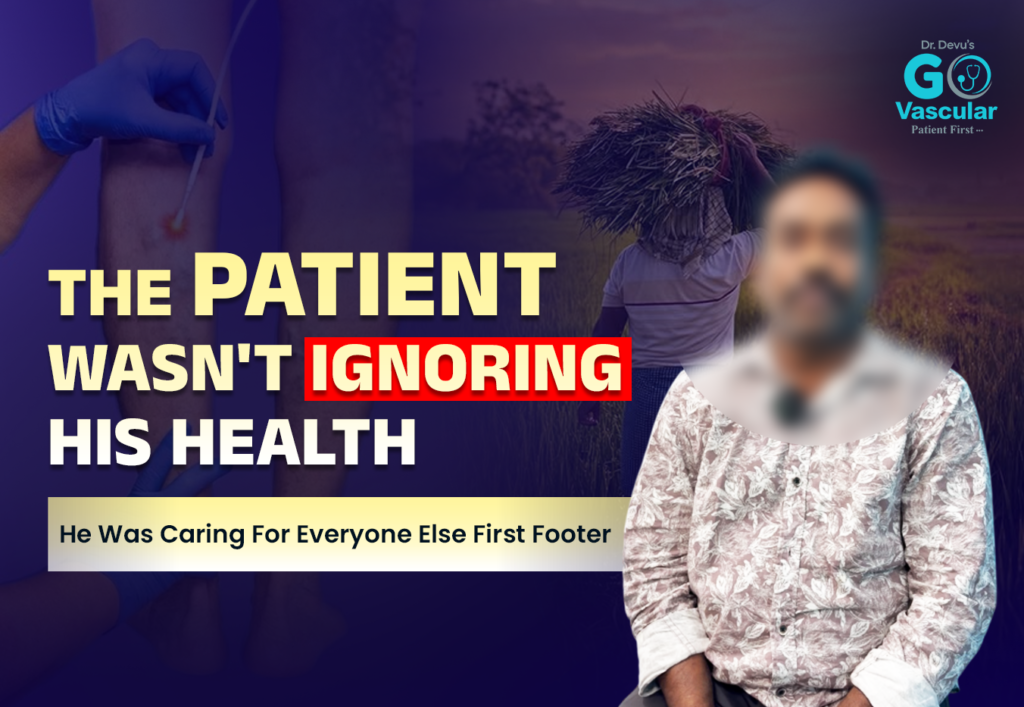
When Caregivers Ignore Their Own Health: Lessons from a Farmer Who Lived with Leg Pain for a Decade
By Dr. Sridhar Devu
Chief Interventional Radiologist
One of the most common patterns I see in vascular practice is not a medical problem—it is a human one.
Many patients do not seek treatment when symptoms first appear.
Not because they are careless.
Not because they do not care about their health.
But because life gets in the way.
Family responsibilities, work commitments, financial concerns, and the belief that “it can wait” often push health concerns to the bottom of the priority list.
Recently, I met a farmer whose journey reflected this reality in a very powerful way.
The Hidden Cost of Delayed Healthcare
The patient had been experiencing leg pain for nearly ten years.
Like many individuals involved in agriculture, he spent long hours standing, walking, and performing physically demanding work.
Initially, he assumed the discomfort was simply a result of hard work.
This is something healthcare professionals hear frequently.
Patients often normalize symptoms that gradually become part of their daily lives.
Aching legs.
Heaviness.
Discomfort after standing.
Night-time leg pain.
Swelling.
Many people adapt to these symptoms rather than investigate them.
Over time, what begins as occasional discomfort can become a chronic condition affecting quality of life.
Why Patients Delay Seeking Care
When we explored his history further, another important factor emerged.
His parents were facing serious health challenges.
His father was undergoing cancer treatment.
His mother was dealing with heart disease and stroke-related complications.
As the only son, he naturally prioritized their care above his own.
This is not unusual.
Across India, family caregivers often postpone their own medical evaluations while caring for loved ones.
From a healthcare perspective, this highlights an important challenge.
Patients are not always avoiding treatment.
Sometimes they are sacrificing their own health because they are fulfilling responsibilities they consider more urgent.
Understanding Varicose Veins Beyond Appearance
A common misconception is that varicose veins are primarily a cosmetic concern.
In reality, venous disease can affect daily comfort and functional ability.
Some individuals may experience:
- Leg heaviness
- Persistent aching
- Swelling
- Fatigue in the legs
- Night-time discomfort
- Reduced ability to stand comfortably for long periods
Symptoms vary significantly from person to person.
Some patients have visible veins with minimal symptoms.
Others may experience substantial discomfort that affects work and daily activities.
This is why individualized assessment is important
The Role of Patient Education
One aspect of this patient’s journey stood out to me.
His decision to seek medical advice was influenced by educational content he encountered online.
He watched a video discussing varicose veins and available treatment options.
The purpose of medical education is not to persuade someone to undergo treatment.
Its purpose is to help patients understand:
- What symptoms may indicate
- When evaluation may be appropriate
- What questions they should ask
- What options may exist
Well-informed patients often make better healthcare decisions because they understand both the problem and the potential solutions.
Why Trust Matters in Healthcare
Many patients arrive with concerns that extend beyond their diagnosis.
They are worried about:
- Recovery
- Cost
- Time away from work
- Family responsibilities
- Long-term outcomes
In this case, the patient wanted clarity.
He wanted to understand his options.
He wanted to know which approach would be most appropriate for his circumstances.
Healthcare decisions should be collaborative.
Patients deserve clear explanations that help them participate in the decision-making process.
Trust develops when patients feel heard, understood, and respected.
Looking Beyond the Disease
As physicians, it is important that we do not focus solely on the ultrasound report or the clinical findings.
We must also understand the individual behind the diagnosis.
This patient was not simply a case of venous disease.
He was:
- A farmer
- A dairy farm owner
- A caregiver
- A son
- A provider for his family
Every treatment decision had to fit within that reality.
Good medicine involves understanding both the condition and the person experiencing it.
An Important Message for Patients
One lesson from this experience is especially relevant.
Persistent symptoms should not be ignored simply because they have become familiar.
Many patients assume:
“I have lived with it for years, so it must not be serious.”
However, duration alone does not determine significance.
If leg symptoms continue to affect daily life, work performance, mobility, or overall well-being, seeking professional evaluation can help identify the underlying cause.
Early assessment provides information.
Information helps patients make informed decisions.
Doctor's Quote
“Many patients adapt to chronic symptoms and learn to live around them. As physicians, our role is not only to provide treatment but also to help patients understand why their symptoms are occurring and what options are available. Awareness and timely evaluation remain essential components of vascular health.”
— Dr. Sridhar Devu
Chief Interventional Radiologist
Frequently Asked Questions
Individuals whose work involves prolonged standing or physical activity may experience leg symptoms that warrant medical evaluation. The underlying cause can vary from person to person.
No. Some individuals may experience symptoms such as heaviness, aching, swelling, or discomfort that can affect daily activities.
If symptoms continue for an extended period, worsen over time, or interfere with normal activities, a medical evaluation may be appropriate.
No. Treatment recommendations depend on individual symptoms, examination findings, and overall clinical assessment.
Common reasons include work commitments, family responsibilities, financial concerns, fear of treatment, or simply assuming symptoms are not significant.